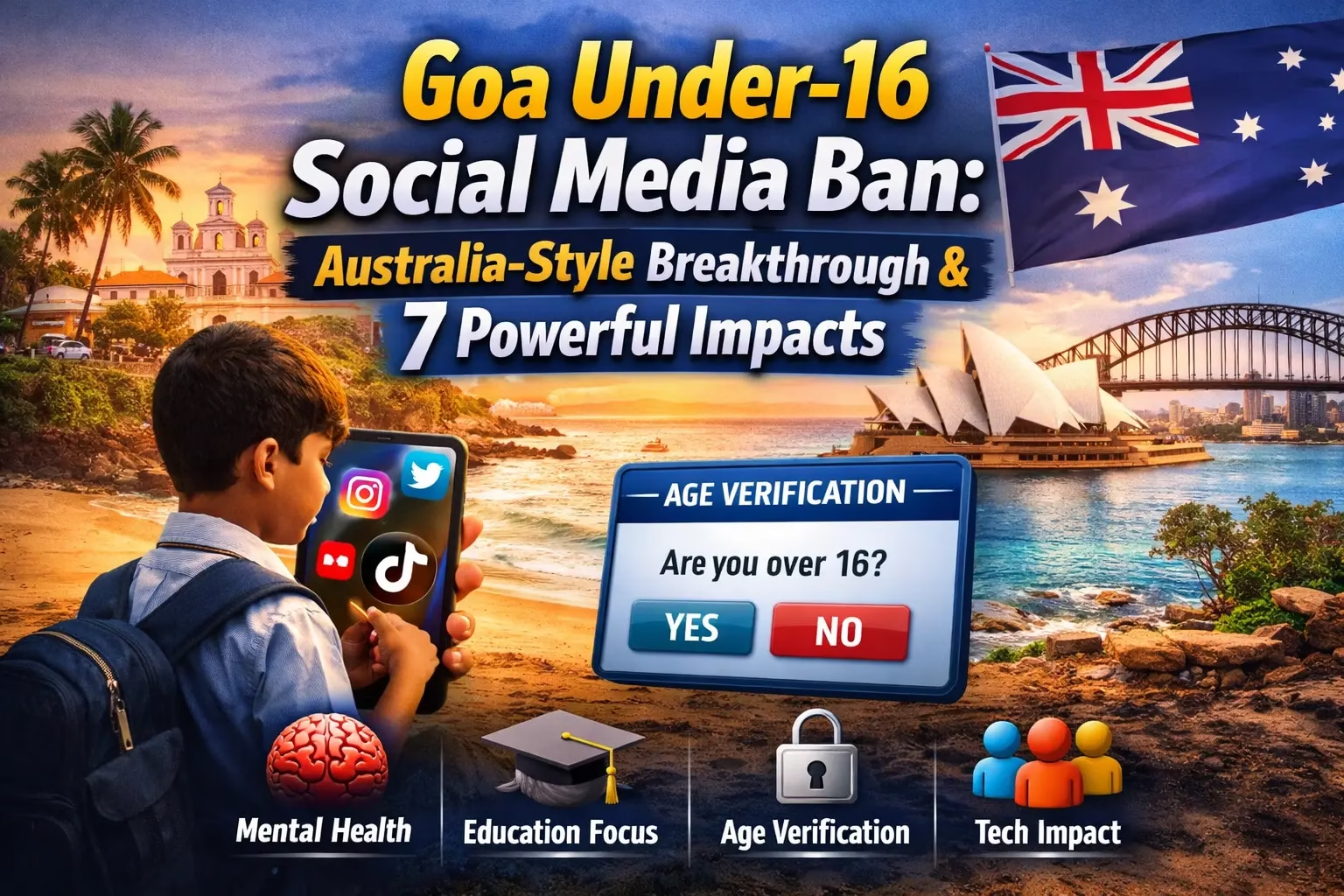
Introduction: Why Goa Is Considering an Under-16 Social Media Ban
The Goa Under-16 Social Media Ban has quickly become one of the most talked-about digital policy ideas in India. At first glance, it sounds bold—even controversial. But when you look closer, it’s rooted in a growing global concern: the impact of social media on children and teenagers.
Over the past decade, social media platforms have become deeply embedded in daily life. Teens scroll, post, like, and share almost constantly. While these platforms offer connection and creativity, they also expose young users to risks like cyberbullying, addictive behavior, misinformation, and mental health challenges. Goa’s proposal, inspired by Australia’s strict youth online safety framework, aims to tackle these problems head-on.
The Rising Concern Over Teen Social Media Use
Studies worldwide suggest that excessive social media use among adolescents is linked to anxiety, sleep disorders, reduced attention spans, and lower academic performance. Parents are worried. Teachers are frustrated. Policymakers are under pressure to act.
In Goa, these concerns are amplified by high smartphone penetration and easy internet access. Teenagers often spend several hours a day online. As a result, the Goa Under-16 Social Media Ban is being discussed as a preventive step rather than a punishment.
Why Goa Is Leading the Conversation in India
Goa has often been a testing ground for progressive policies. Its smaller population and higher digital literacy make it suitable for piloting new regulations. By considering an Australia-style approach, Goa signals that child safety in the digital world is no longer optional—it’s essential.
Importantly, this proposed ban doesn’t mean cutting children off from technology entirely. Instead, it focuses on controlled, age-appropriate access while promoting healthier digital habits. That’s a key distinction many critics initially miss.
Australia-Style Model Explained: How the Under-16 Social Media Ban Works
To understand the Goa Under-16 Social Media Ban, we need to look at Australia’s approach. Australia has been proactive in regulating digital platforms, especially where minors are concerned. Its policies focus on accountability, safety, and shared responsibility.
What Australia Did Differently
Australia introduced laws that shift responsibility onto social media companies. Platforms are required to take “reasonable steps” to prevent underage users from accessing certain features. This includes stricter content moderation, clearer reporting systems, and penalties for non-compliance.
Unlike older models that relied on users simply entering their date of birth, Australia pushed for stronger safeguards. This approach recognizes that kids are smart—and often lie about their age online.
Age Verification Systems Explained
One of the core elements likely to influence the Goa Under-16 Social Media Ban is age verification. Australia explored methods such as:
- Government-approved digital ID systems
- Parental consent mechanisms
- AI-based age estimation tools
Each method has pros and cons. Digital IDs are accurate but raise privacy concerns. AI tools are less intrusive but not always precise. Goa would need to balance safety with data protection if it adopts similar systems.
Role of Parents, Schools, and Platforms
Another strength of the Australia-style model is shared responsibility. Parents are encouraged to stay involved. Schools promote digital literacy. Platforms are legally obligated to comply.
For Goa, this means the ban wouldn’t work in isolation. Awareness campaigns, school programs, and parental guidance would all play crucial roles. Without these, enforcement alone wouldn’t be effective.
Legal Framework and Enforcement
Enforcement is where things get serious. In Australia, penalties can include heavy fines for companies that fail to protect minors. If Goa follows this path, social media giants may need to redesign their India-specific policies.
This could mark a turning point in how global tech companies treat Indian regulations—no longer as optional guidelines, but as enforceable law.
For more on Australia’s online safety framework, you can explore resources from the Australian eSafety Commissioner:
👉 https://www.esafety.gov.au
Potential Impacts of Goa Under-16 Social Media Ban
If implemented effectively, the Goa Under-16 Social Media Ban could have far-reaching consequences—some expected, others surprising.
Mental Health and Wellbeing
The most immediate benefit could be improved mental health among teenagers. Reduced exposure to online comparison, cyberbullying, and addictive scrolling may lower stress and anxiety levels.
Many psychologists argue that early adolescence is a critical developmental stage. Limiting social media during this period could help teens build stronger self-esteem and healthier relationships offline.
Education and Academic Focus
Teachers often report that social media distracts students from studies. Notifications, late-night scrolling, and viral trends interfere with concentration.
By restricting access under 16, Goa could see improvements in:
- Classroom engagement
- Homework completion
- Reading and creative activities
Of course, this doesn’t mean banning educational technology. Platforms designed for learning would still be accessible.
Digital Literacy and Safer Internet Use
Ironically, limiting access can actually improve digital literacy. With structured guidance, teens can learn:
- How algorithms work
- How to spot misinformation
- How to protect personal data
Instead of uncontrolled exposure, the Goa Under-16 Social Media Ban could encourage a more thoughtful introduction to the online world.
Economic and Tech Industry Effects
There will be economic implications too. Social media companies may see reduced youth engagement in Goa. However, this could also spur innovation in:
- Child-safe platforms
- Educational apps
- Parental control tools
Local startups might find new opportunities by focusing on ethical tech solutions.
Challenges, Criticism, and Ethical Concerns
No policy is without controversy, and the Goa Under-16 Social Media Ban is no exception.
Privacy and Data Protection Issues
Age verification often requires collecting sensitive data. Critics worry about data misuse, leaks, or surveillance. Goa would need strong data protection laws and transparent systems to gain public trust.
Without these safeguards, the cure could feel worse than the disease.
Freedom of Expression Debate
Some argue that banning under-16s from social media restricts freedom of expression. Teenagers use these platforms to voice opinions, showcase talents, and engage in social causes.
Supporters counter that freedom must be age-appropriate. Just as there are age limits for driving or voting, digital spaces may also require boundaries.
Implementation Challenges in India
India’s diversity makes enforcement tricky. Fake accounts, VPNs, and shared devices could undermine the ban. Rural-urban differences in digital access add another layer of complexity.
That said, Goa’s smaller scale makes it a practical testing ground. Lessons learned here could inform national policy later.
Global Perspective on Youth Social Media Regulation
Goa isn’t alone in exploring such measures. Around the world, governments are rethinking how children interact with digital platforms.
Europe’s Approach
Several European countries focus on:
- Strong data protection (GDPR)
- Parental consent for minors
- Platform accountability
Rather than outright bans, they emphasize regulation and education.
Lessons for India and Goa
From global examples, one lesson stands out: no single solution fits all. The Goa Under-16 Social Media Ban would need continuous review, public consultation, and flexibility.
If done right, it could position Goa—and India—as leaders in child-centric digital governance.
❓ Frequently Asked Questions (FAQs)
1. What is the Goa Under-16 Social Media Ban?
It’s a proposed policy to restrict children under 16 from accessing mainstream social media platforms, inspired by Australia’s online safety laws.
2. Is this a complete internet ban for under-16s?
No. The focus is on social media platforms, not educational or essential online services.
3. How will age be verified?
Possible methods include digital IDs, parental consent, or AI-based age estimation, depending on final regulations.
4. Why is Goa considering this first?
Goa’s size, digital literacy, and progressive policy environment make it suitable for piloting such initiatives.
5. Will this affect social media companies in India?
Yes. Platforms may need to adjust policies, verification systems, and compliance strategies.
6. Can this model be applied across India?
If successful in Goa, it could influence broader national discussions and policies.
Conclusion: The Road Ahead for Goa
The Goa Under-16 Social Media Ban represents more than just a restriction—it’s a statement. It signals that child wellbeing matters more than clicks, likes, or ad revenue. While challenges remain, the optimistic takeaway is clear: governments are finally taking youth digital safety seriously.
If Goa balances protection with privacy, and regulation with education, this Australia-style breakthrough could become a model for the rest of India—and beyond.